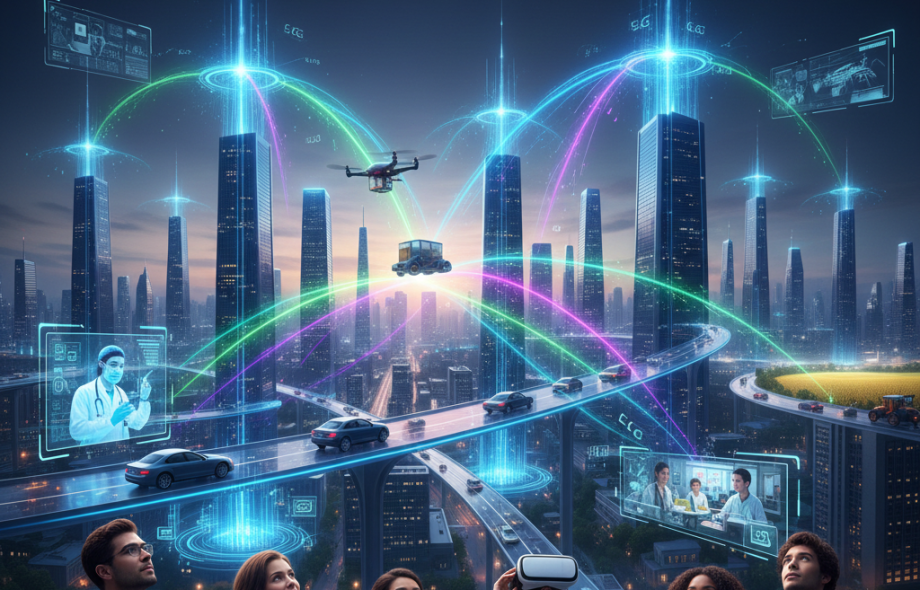
5G technology has been making waves in the world of telecommunications and connectivity. As the next generation of mobile networks, 5G promises to deliver faster speeds, lower latency, and increased capacity compared to its predecessors. With the potential to revolutionize various industries and enable new applications, the rollout of 5G networks has been met with significant anticipation and excitement.
One of the key benefits of 5G technology is its blazing-fast speed. With theoretical peak speeds of up to 20 gigabits per second, 5G has the potential to be up to 100 times faster than 4G LTE. This means that tasks such as downloading movies, streaming high-definition videos, and online gaming can be completed seamlessly and without any lag. Additionally, the low latency of 5G networks means that data can be transmitted almost instantaneously, opening up new possibilities for real-time applications like remote surgery and autonomous vehicles.
Furthermore, 5G technology is expected to significantly improve network capacity, allowing for more devices to be connected simultaneously without causing congestion. This is particularly important in the age of the Internet of Things (IoT), where billions of devices are expected to be connected to the internet. With 5G, smart cities, autonomous drones, and wearable devices can all communicate more efficiently and effectively.
The rollout of 5G technology is not without its challenges, however. The deployment of 5G networks requires significant investments in infrastructure, including the installation of new base stations and antennas. Additionally, there are concerns about the potential health effects of exposure to the higher frequencies used by 5G networks. As a result, regulatory bodies and policymakers are working to address these issues and ensure the safe and responsible deployment of 5G technology.
Despite these challenges, the potential of 5G technology to transform industries such as healthcare, education, and entertainment is immense. From enabling remote surgeries and virtual classrooms to enhancing the immersive experience of augmented reality and virtual reality applications, 5G has the power to reshape the way we live, work, and connect with one another.
In conclusion, 5G technology represents a significant step forward in the evolution of connectivity and telecommunications. With its faster speeds, lower latency, and increased capacity, 5G has the potential to unlock new possibilities and drive innovation across various industries. As the rollout of 5G networks continues around the world, it will be exciting to see the impact that this transformative technology will have on society as a whole.
 :
https://in.pinterest.com/panoramicinfotech/
:
https://in.pinterest.com/panoramicinfotech/