Introduction
The Canned Seafood Market plays a significant role in the global food industry by offering long shelf life, nutritional value, and convenience to consumers worldwide. Canned seafood products such as tuna, salmon, sardines, mackerel, and shellfish are widely consumed across households, foodservice establishments, and institutional buyers. Rising demand for protein-rich diets, increasing preference for ready-to-eat foods, and growing awareness of the health benefits of seafood are key factors supporting market growth.
Market Size and Growth Projections
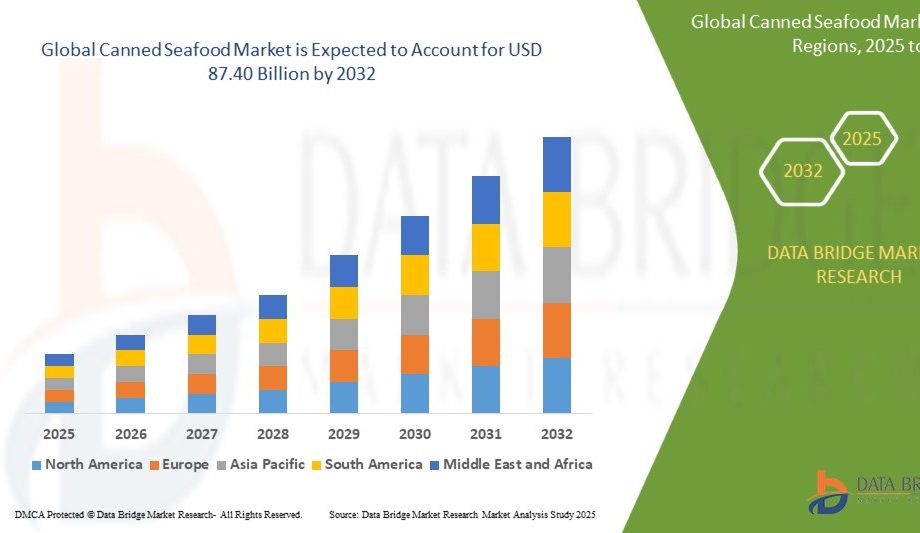
The Canned Seafood Market is witnessing steady growth driven by changing consumer lifestyles, urbanization, and the increasing need for convenient and affordable food options. The expansion of modern retail channels, improvements in canning and preservation technologies, and growing global seafood consumption are further strengthening market expansion. Demand from emerging economies and rising penetration of e-commerce grocery platforms are expected to support market growth during the forecast period.
Get More Details : https://www.databridgemarketresearch.com/reports/global-canned-seafood-market
Key Growth Factors
-
Rising demand for convenient and ready-to-eat food products
-
Growing awareness of the health benefits of seafood consumption
-
Increasing preference for high-protein and omega-rich diets
-
Expanding urban population and busy lifestyles
-
Longer shelf life compared to fresh seafood products
-
Growth of modern retail and online grocery platforms
-
Increasing demand from foodservice and institutional buyers
-
Improved cold chain and seafood processing infrastructure
Market Segmentation
By Product Type
-
Canned Tuna
-
Canned Salmon
-
Canned Sardines
-
Canned Mackerel
-
Canned Shellfish
-
Other Canned Seafood
By Processing Type
-
Fresh Canned
-
Frozen Canned
By Distribution Channel
-
Supermarkets and Hypermarkets
-
Convenience Stores
-
Online Retail
-
Foodservice and Restaurants
-
Specialty Stores
By End User
-
Household Consumers
-
Foodservice Operators
-
Hotels and Catering Services
-
Institutional Buyers
Regional Insights
North America
North America holds a significant share of the market due to high seafood consumption, strong retail presence, and growing demand for convenient protein-rich foods.
Europe
Europe shows steady growth supported by traditional seafood consumption habits, rising health awareness, and increasing demand for sustainably sourced seafood products.
Asia-Pacific
Asia-Pacific is the fastest-growing region driven by large population base, expanding middle-class income, and growing preference for packaged and preserved seafood.
Middle East & Africa
Growth in the region is supported by rising urbanization, expanding retail infrastructure, and increasing demand for long-shelf-life food products.
South America
South America experiences moderate growth due to strong fishing industries, export-oriented production, and rising domestic seafood consumption.
Key Market Drivers
-
Growing demand for shelf-stable food products
-
Increasing consumption of seafood for health benefits
-
Rising popularity of ready meals and convenience foods
-
Expansion of retail and distribution networks
-
Growing awareness of sustainable seafood sourcing
Market Challenges and Restraints
-
Fluctuations in raw seafood supply and pricing
-
Concerns related to overfishing and sustainability
-
Rising regulatory pressure on fishing and processing practices
-
Competition from fresh and frozen seafood alternatives
-
Perception challenges related to taste and freshness
Competitive Landscape and Key Companies
The Canned Seafood Market is highly competitive, with global and regional players focusing on product diversification, sustainability, and brand positioning. Key companies include:
-
Thai Union Group
-
Bumble Bee Foods
-
StarKist
-
Maruha Nichiro
-
Dongwon Industries
-
Century Pacific Food
-
Princes Group
-
Bolton Group
-
Trident Seafoods
-
High Liner Foods
These companies emphasize sustainable sourcing, product innovation, and expansion into emerging markets.
Technological Innovations
-
Advanced canning and sterilization technologies
-
Improved packaging materials for extended shelf life
-
Traceability systems for seafood sourcing
-
Automation in seafood processing and packaging
-
Development of low-sodium and value-added canned products
-
Innovations in sustainable fishing and processing methods
SWOT Analysis
| Long shelf life and convenience | Dependence on marine resource availability |
| High nutritional value | Sensitivity to raw material price fluctuations |
| Wide global consumer acceptance | Limited product differentiation in some segments |
| Rising demand in emerging markets | Overfishing and sustainability concerns |
| Growth of health-conscious consumer segments | Regulatory restrictions on fishing practices |
| Expansion of online grocery platforms | Competition from fresh and frozen seafood |
Future Market Outlook
The Canned Seafood Market is expected to continue its steady growth as consumers increasingly seek convenient, nutritious, and affordable food options. Rising health awareness, expanding retail channels, and ongoing innovation in packaging and sustainability practices will support long-term market development. Emerging markets and value-added product offerings are expected to create new growth opportunities.
Conclusion
The Canned Seafood Market remains a vital segment of the global food industry, offering reliable nutrition and convenience to consumers worldwide. With strong demand across households and foodservice channels, the market continues to benefit from evolving consumer preferences and technological advancements. As sustainability and health considerations gain prominence, canned seafood producers are well positioned to drive future growth through innovation and responsible sourcing.
 :
: